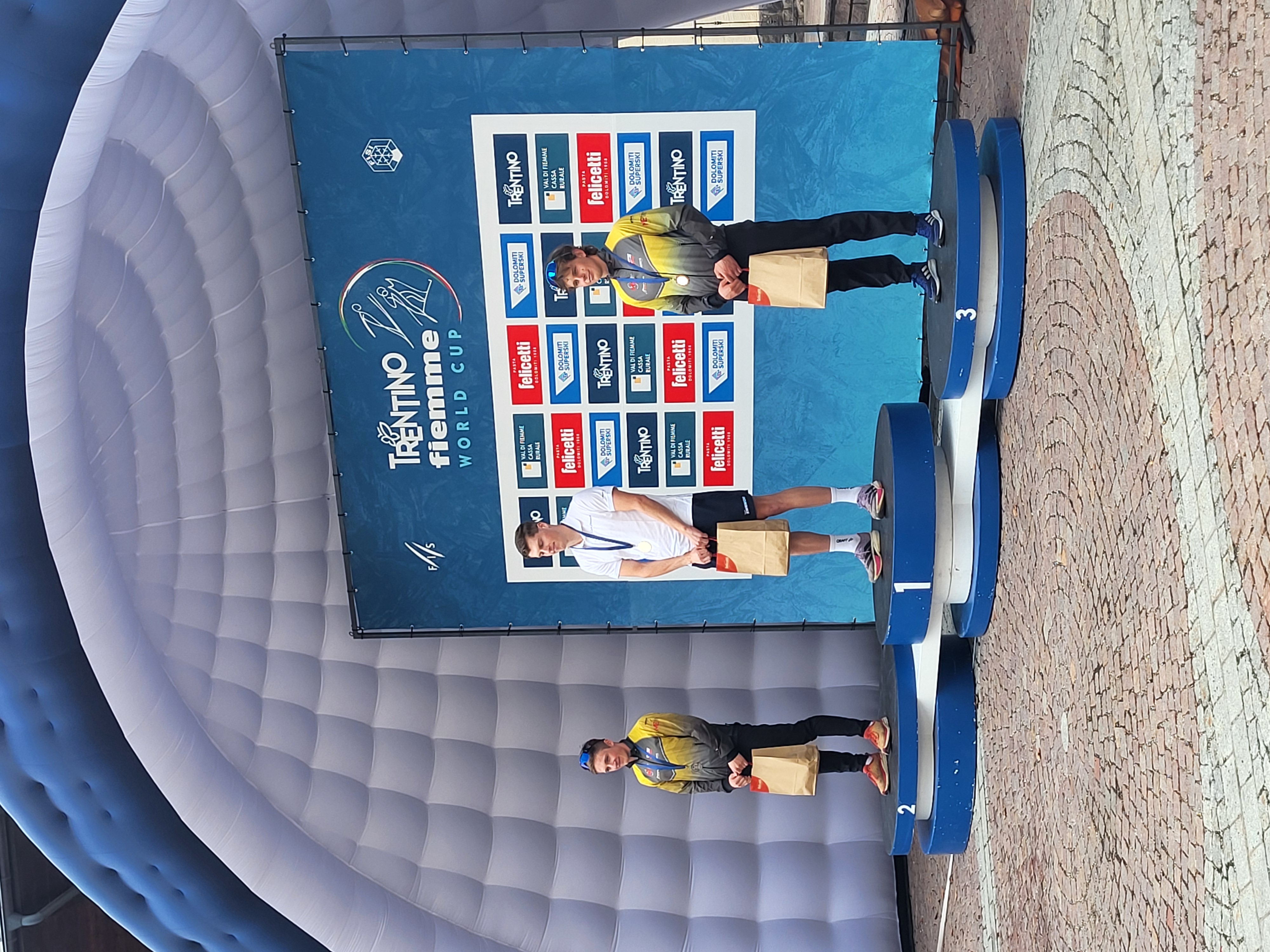



The 2026 Roller Ski World Cup season is drawing to a close. After the Swedish opener in Trollhättan and the electrifying stop in Madona (Latvia) — which also hosted the World Championships — the circuit arrives in Ziano di Fiemme, Italy, from 18 to 20 September for the final stage and the Crystal Globe presentations. Three events are on the programme — the Alpe Cermis climb, the supersprint and the team sprint — across four categories: senior men, senior women, junior men and junior women. That makes twelve titles to award. Here are our predictions, event by event.
The context: a compact season, a high-stakes finale
This year, the FIS reduced the calendar to three stages over 24 days: Trollhättan (28–30 August), Madona (3–6 September, doubled as the World Championships) and Val di Fiemme (18–20 September). The Italian programme opens on Thursday with the legendary Alpe Cermis climb, made famous in winter by the Tour de Ski, then continues with a supersprint before closing on Sunday with the team sprint.
A methodological note: the supersprint is precisely the 200-metre format — and this event was contested in Madona, through the city streets. Those results therefore translate directly and form the basis of the predictions below. By contrast, the sprint held in Trollhättan was not in supersprint format (different distance and format): those Swedish results have therefore been deliberately excluded here.
Another point worth keeping in mind: if the junior field promises to be so deep and competitive this season, it is no coincidence. The traditional Nordic skiing nations increasingly regard summer roller skiing as a genuine development laboratory, and no longer hesitate to field their best young athletes rather than saving them for the winter snow. The result is a junior field that often rivals the senior field in depth, with duels such as the one already forming between Bruno Bilans and the Maury brothers.
1. The Alpe Cermis climb
Mass-start / uphill format: the queen event for athletes built for long efforts, in direct line with the mass-start at the Madona World Championships.
- Senior men: Latvia's Raimo Vigants, who delivered a spectacular performance in Madona (gold in the team sprint, then gold in the 20 km mass start on home soil), is the clear favourite for this endurance format.
- Senior women: Norway's Ragnhild Aarekol is the obvious pick — triple world champion in Madona, including the 20 km mass start title, making her the absolute benchmark on long efforts at the moment.
- Junior men: Slovenia's Tine Sporn, who won the classic individual title in Madona, has the profile of a climber to watch on a format similar to an uphill race.
- Junior women: Ukraine's Sofiia Shkatula, junior world champion in the classic individual, looks like the most solid candidate for long-effort races among the junior women.
2. The supersprint
As noted above, the 200-metre skate event held in Madona is exactly the same format as the Val di Fiemme supersprint: predictions therefore draw directly from those results.
- Senior men: Italy's Emanuele Becchis, world champion in the 200 metres at Madona and a consistent performer in this format over recent years, also has home advantage — a double edge that makes him the logical favourite. But the race will not be handed to him: his compatriot Michele Valerio, who has already reached the final alongside him at previous Italian editions, is the most serious candidate to deny him victory.
- Senior women: Latvia's Linda Kaparkaleja, who won the same 200-metre event in Madona, arrives with the strongest credentials for this explosive format.
- Junior men: plenty of suspense ahead. Latvia's Bruno Bilans, reigning world champion after defeating the Maury brothers in the final run, will be the man to watch — but Lévi Maury (silver) and Eliott Maury (bronze) will be keen to take revenge on their favourite Italian terrain. Two further outsiders with exceptional flat-out speed should not be overlooked: Italy's Davide Piccinini, competing on home ground, and Sweden's Ville Jutterdal, who has already stood on the Val di Fiemme sprint podium.
- Junior women: no clear frontrunner has emerged on this distance among the junior women this season; this looks set to be the most open of the twelve events.
3. The team sprint
The closing event, mirroring what took place in Madona just a few days earlier.
- Senior men: the Latvian duo Raimo Vigants – Lauris Kaparkalejs, reigning world champions in this discipline, are the natural favourites, with Swedes Erik Fransson and Simon Karlsson (silver in Madona) lying in wait.
- Senior women: the Norwegian pair Ragnhild Aarekol – Synnøve Kjosavik, also crowned in Madona, start as favourites to repeat their performance.
- Junior men: Sweden's Theo Malm – Ville Jutterdal, junior world team sprint champions in Madona, are the benchmark to beat.
- Junior women: Norway's Mille Sophie Sveinhaug Aarnes – Emilie Ruud Lia, likewise crowned in Madona, go into the event as favourites.
In summary
Between Raimo Vigants's Latvian festival, Ragnhild Aarekol's World Championship hat-trick, home advantage for Italy's Emanuele Becchis and a Maury-Bilans rematch that promises to be electric in the junior ranks, Val di Fiemme looks set to deliver a finale that is both predictable on certain names... and completely open on others, starting with the women's supersprint and the junior women's categories, where no clear trend has yet emerged this season. One thing is certain: the depth of the junior field, driven by the Maury-Bilans duel and the Italian-Swedish rivalry between Piccinini and Jutterdal, looks set to be one of the defining storylines of this Italian weekend.